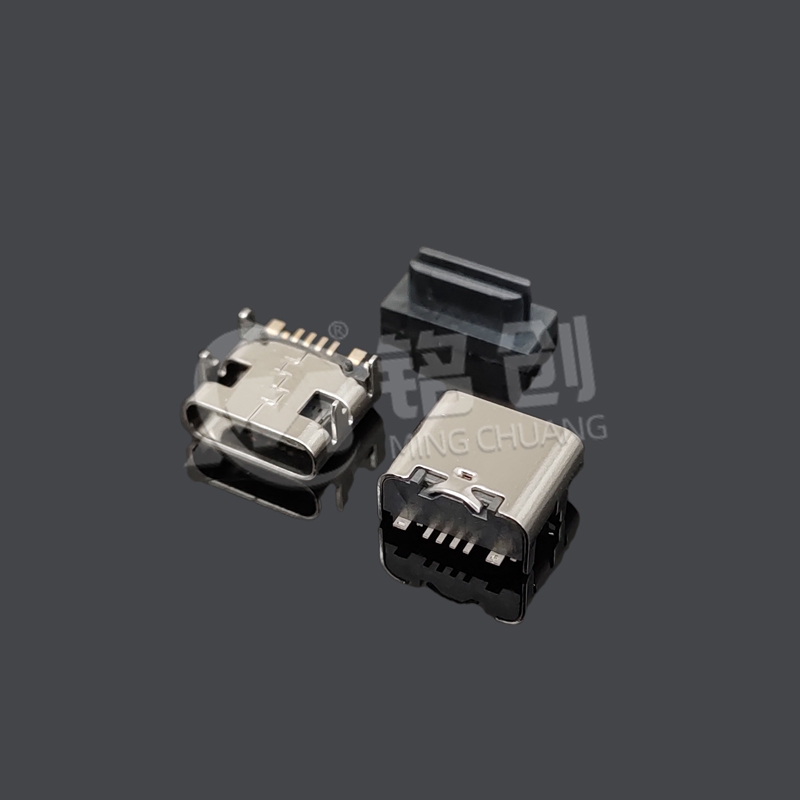
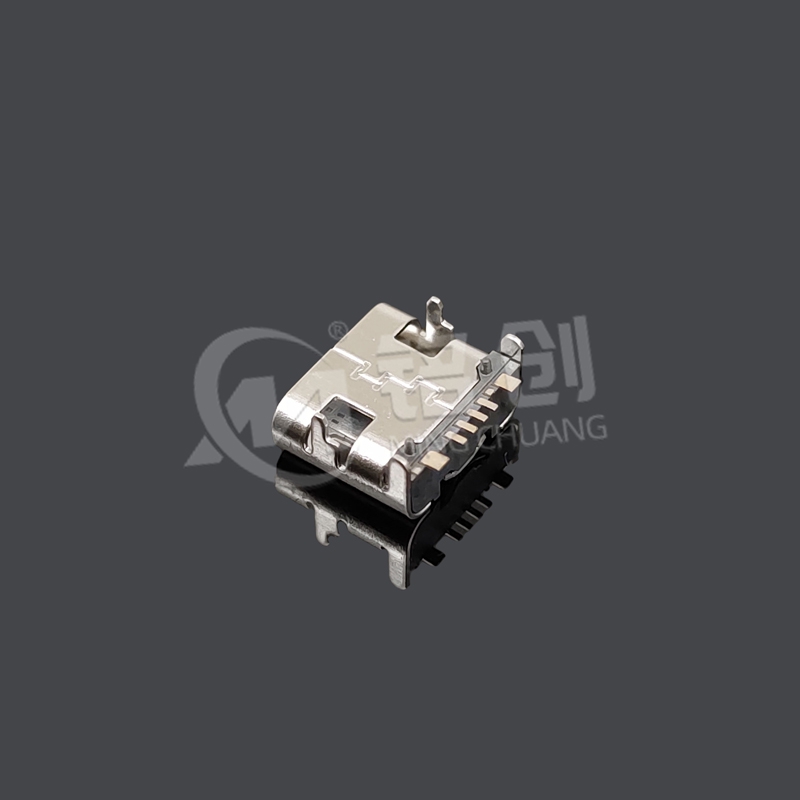
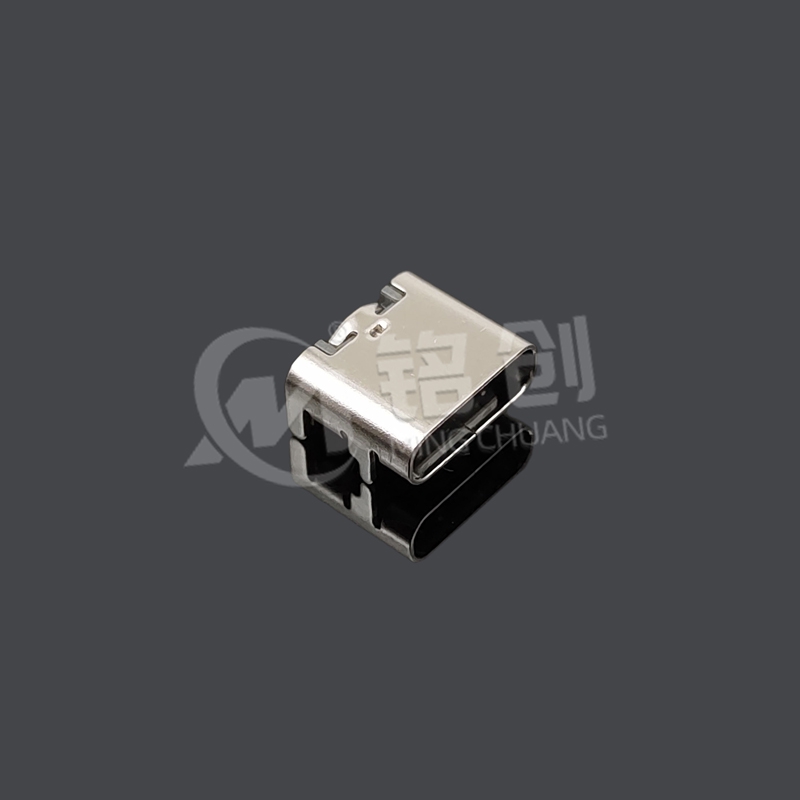
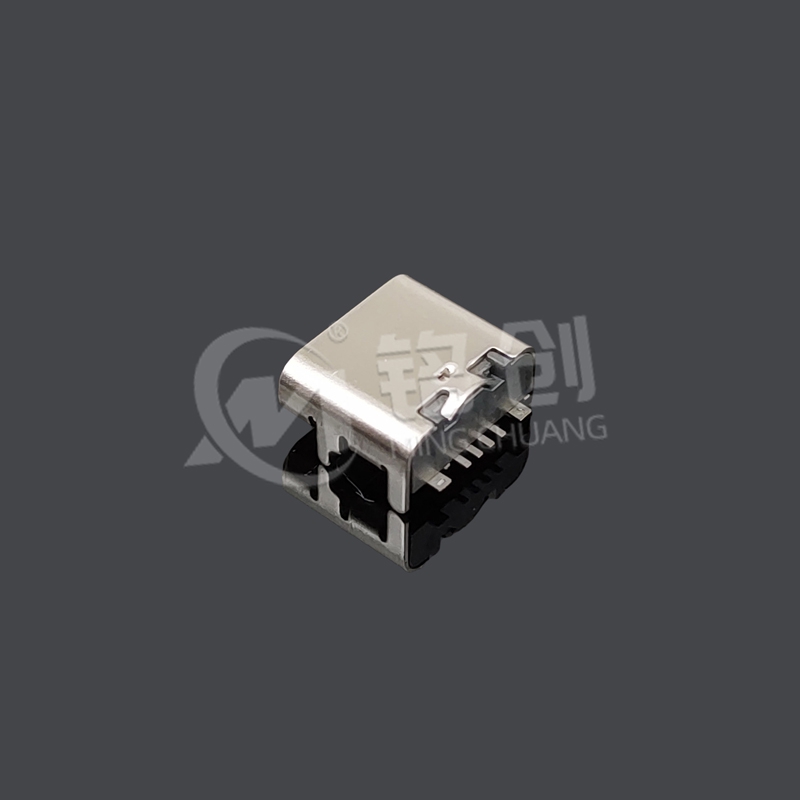
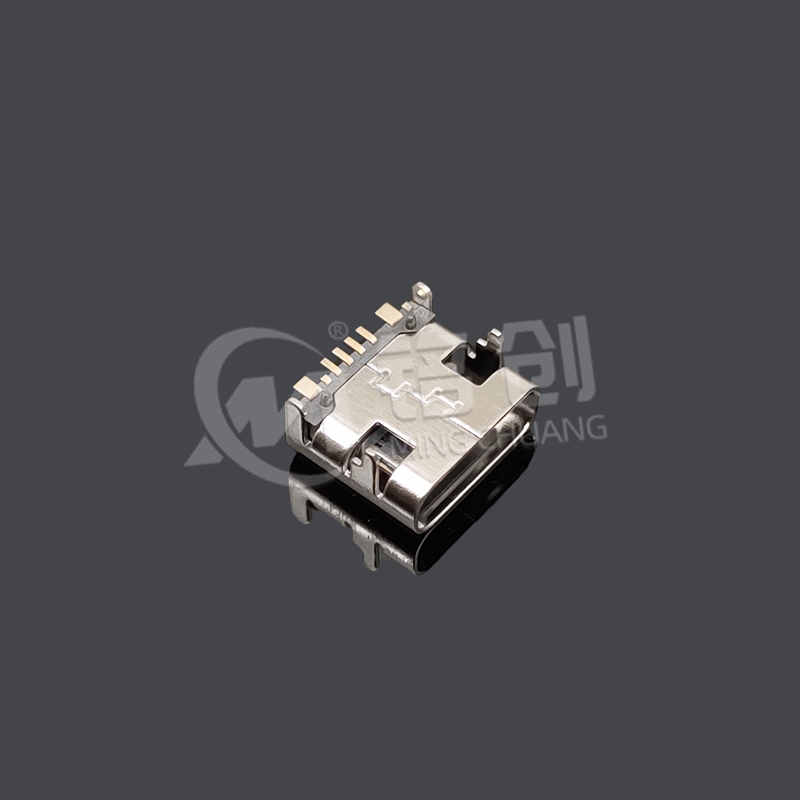


This product is a 6PIN simplified design Type-C female socket, which is mounted on a board with four pins SMT. The overall height is L=7.35mm, suitable for compact PCB layout. It supports USB2.0 data transmission (480Mbps) and the third mock examination fast charging protocol (5V/3A, 9V/2A, 12V/1.5A). The stainless steel housing is combined with brass gold plated terminals, which has high corrosion resistance and conductivity. LCP material shell can withstand temperatures up to 265 ℃, suitable for scenarios such as consumer electronics, industrial control, automotive electronics, etc
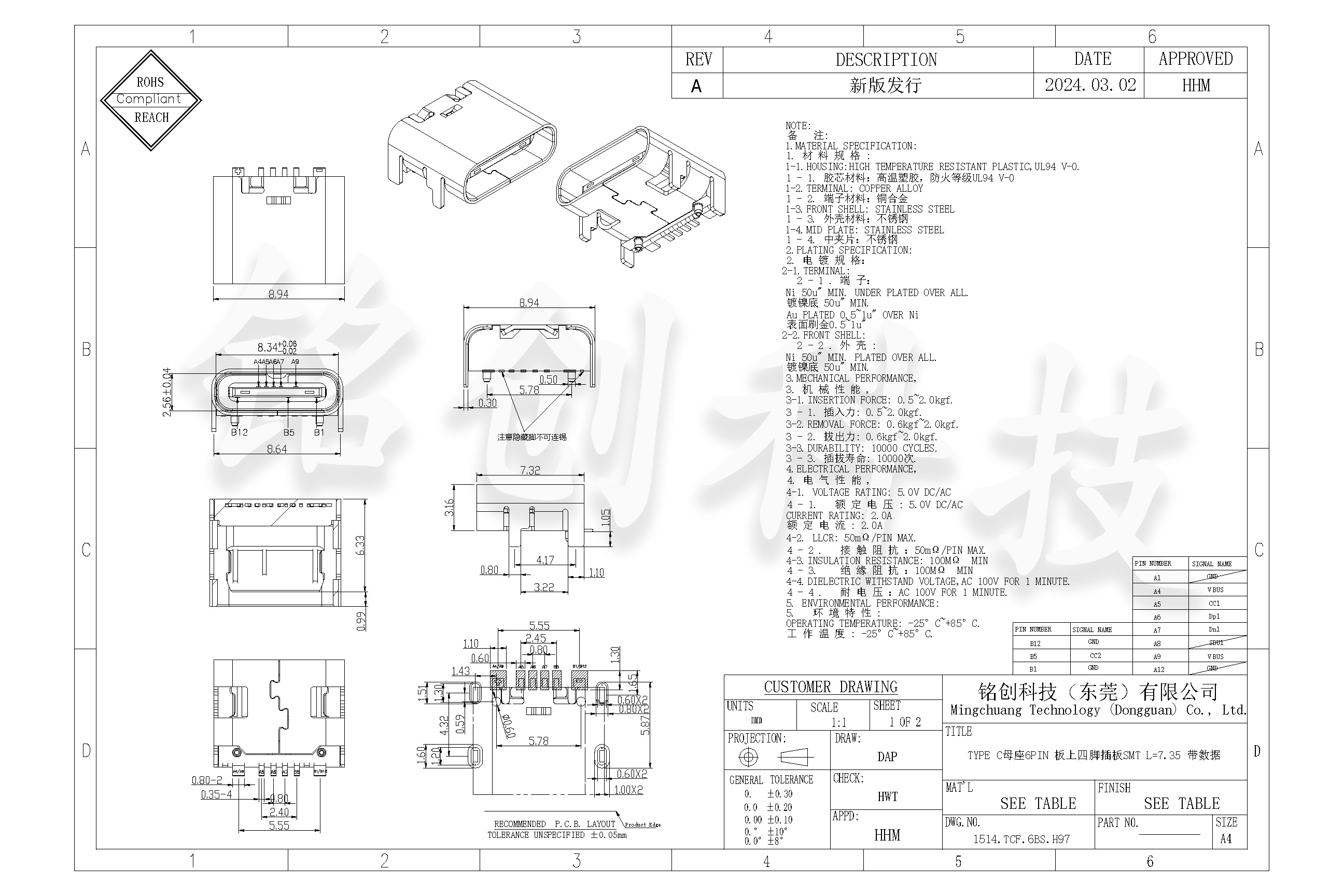
Industry certification:
USB-IF certification: Through USB-IF organization USB2.0 Full Speed certification (certification number: USB-IF-2022-0012), ensure compatibility and data transmission stability with mainstream USB devices.
Environmental certification: Compliant with RoHS 2011/65/EU directive (harmful substances such as lead, mercury, cadmium content<0.1%), passed REACH SVHC 235 tests (phthalates<0.1%), and meets ELV 2000/53/EC standards (automotive electronics recycling requirements).
Safety and Electromagnetic Compatibility: Obtained UL 94 V-0 flame retardant certification (shell burning rate ≤ 100mm/min), CE/FCC certification (conducted disturbance ≤ 40dB μ V @ 30MHz-1GHz, radiated disturbance ≤ 30dB μ V @ 30MHz-10GHz), ESD protection level up to ± 8kV (contact discharge).
Industry standards:
Industrial application: Compliant with ISO 13849-1 (PLd level) mechanical safety standard, passed 5-500Hz sweep vibration test (acceleration 10G, amplitude 0.35mm), suitable for industrial automation equipment.
Automotive Electronics: Optional AEC-Q200 Rev E certification (-40 ° C to 125 ° C temperature cycling test, performance degradation ≤ 5% after 1000 cycles), meeting ISO 16750-2 electrical load standards.
Production control:
Full process ERP traceability: raw material batch record (brass alloy batch number C194-202405), production process parameters (reflow soldering peak 250 ℃± 5 ℃), finished product inspection report (initial contact impedance value<30m Ω,<50m Ω after 5000 insertions and removals).
Sampling test: Conduct salt spray test (5% NaCl solution, 48 hours), high temperature aging (85 ℃, 96 hours), and insulation resistance test (500V DC,>100M Ω) for each batch.
For more information, please contact us:
- Hotline: +86 13310802726
- Email: mc13310802726@163.com
Installation requirements:
Welding process: The reflow soldering temperature curve is controlled at a preheating section of 150-180 ℃ (60-90 seconds), a holding section of 180-210 ℃ (60 seconds), and a reflow section of 230-255 ℃ (peak value ≤ 255 ℃, holding time 60 seconds). It is recommended to use nitrogen protection (O ₂ content<100ppm) to reduce oxidation.
Positioning accuracy: The tolerance between the four pin SMT pad and the PCB through-hole is ≤ 0.03mm. It is recommended to use a 0.8mm thickness positioning fixture, and after soldering, use 3D AOI to detect the pin offset of < 0.05mm.
Anti static measures: Wear an anti-static wristband (grounding resistance 1-10M Ω) during operation, and lay an anti-static mat (surface resistance 10 ⁶ -10 ⁹ Ω) at the welding station.
Usage restrictions:
Electrical load: Continuous operating current ≤ 3A, instantaneous peak current ≤ 5A (duration < 10ms); When the thickness of PCB copper foil is ≥ 35 μ m (1oz), it is recommended to parallel a 100 μ F/16V electrolytic capacitor (low ESR type) to suppress ripple on the VBUS pin.
Environmental restrictions: Non waterproof models are prohibited from long-term use in environments with humidity greater than 90% RH; Waterproof model (to be customized) requires insulation resistance retesting (>100M Ω) after immersion in water. It is recommended to replace the sealing ring once a year (made of fluororubber material with a Shore hardness of 70 ± 5A).
Compatibility Description:
Protocol adaptation: When connecting with the PD fast charging device, it is necessary to use an external protocol chip (such as IP2721) to achieve the third mock examination fast charging; When connected to USB 3.0 devices, the data rate automatically drops to 480Mbps. It is recommended to use a USB-IF certified A-Micro B cable (AWG28 specification, impedance ≤ 90 Ω).
Device matching: Avoid connecting to non certified docking stations (which may cause abnormal CC pin voltage), recommended compatible chip models: TI TPS2596, Dialog DA9063.
Maintenance suggestion:
Daily cleaning: Clean the interface gap dust with compressed air (0.5MPa) every 2 months in industrial environments, and wipe the stainless steel shell with anhydrous ethanol (purity ≥ 99.5%). It is forbidden to use chlorine containing solvents (such as trichloroethylene).
Storage requirements: Unused mother sockets should be stored in a moisture-proof box (humidity ≤ 40% RH) at a temperature of -20 ℃ to 60 ℃, avoiding storage with strong magnetic field equipment (such as transformers), and preventing the magnetization of brass terminals from affecting conductivity.
Special scenario prompt:
Automotive electronic applications: During in car installation, a thermal conductive silicone sheet (with a thermal conductivity of 1.5W/m · K) should be added between the housing and PCB to avoid local overheating (temperature ≤ 85 ℃) caused by long-term high current operation.
Medical device application: Additional ISO 10993-5 cytotoxicity testing (absorbance ≤ 0.1) is required, 75% medical ethanol should be used for cleaning, and direct UV radiation on the LCP shell is prohibited (which may cause material aging).
For more information, please contact us:
- Hotline: +86 13310802726
- Email: mc13310802726@163.com


|
Mob:13310802726 / Tel:0769-85605360 |

|
Email:mc13310802726@163.com |

|
Address: No. 1, Chengxin Road, Changan Town, Dongguan City, Guangdong Province, China |

Copyright © 2024-2026 Mingchuang Technology (Dongguan) Co., Ltd. All rights reserved Web Design—Quanfang Network