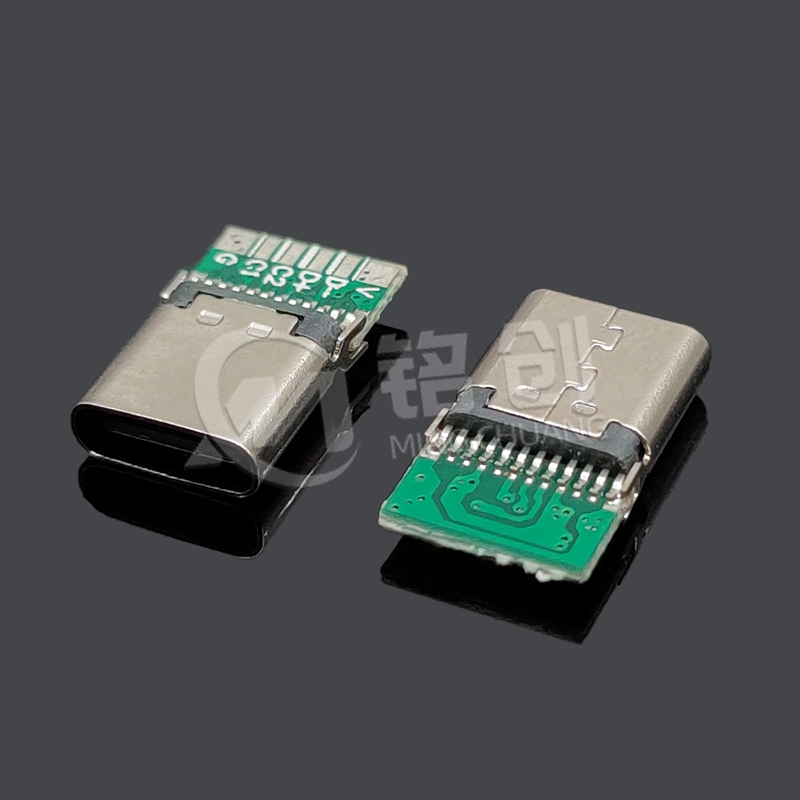
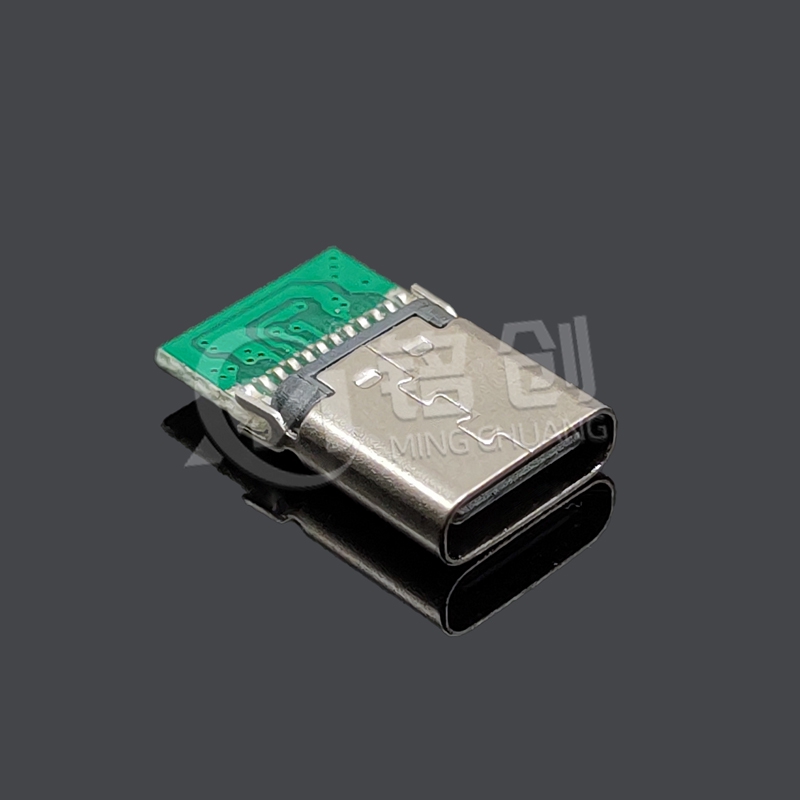
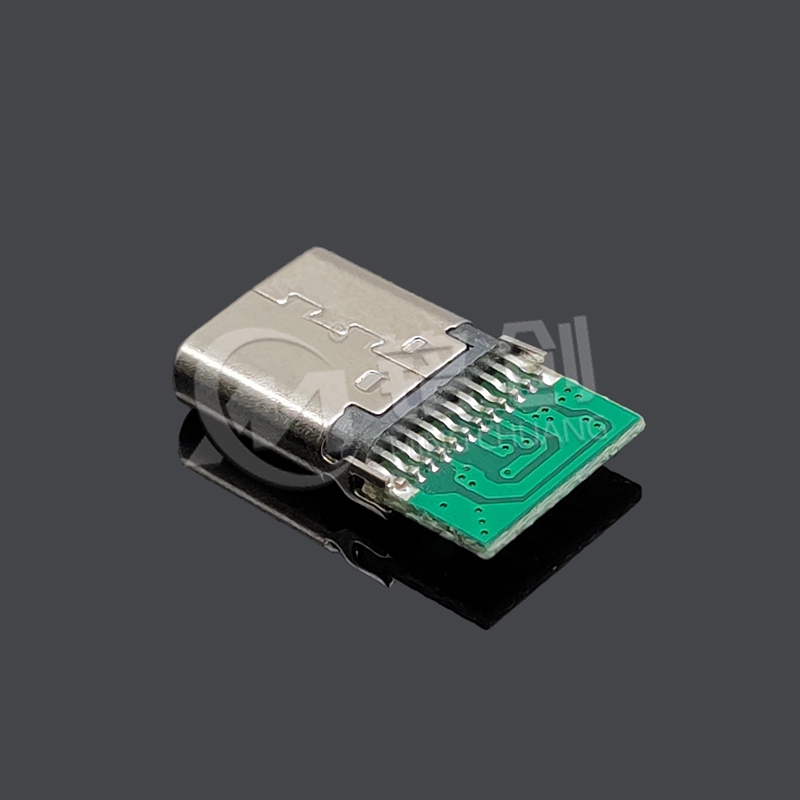
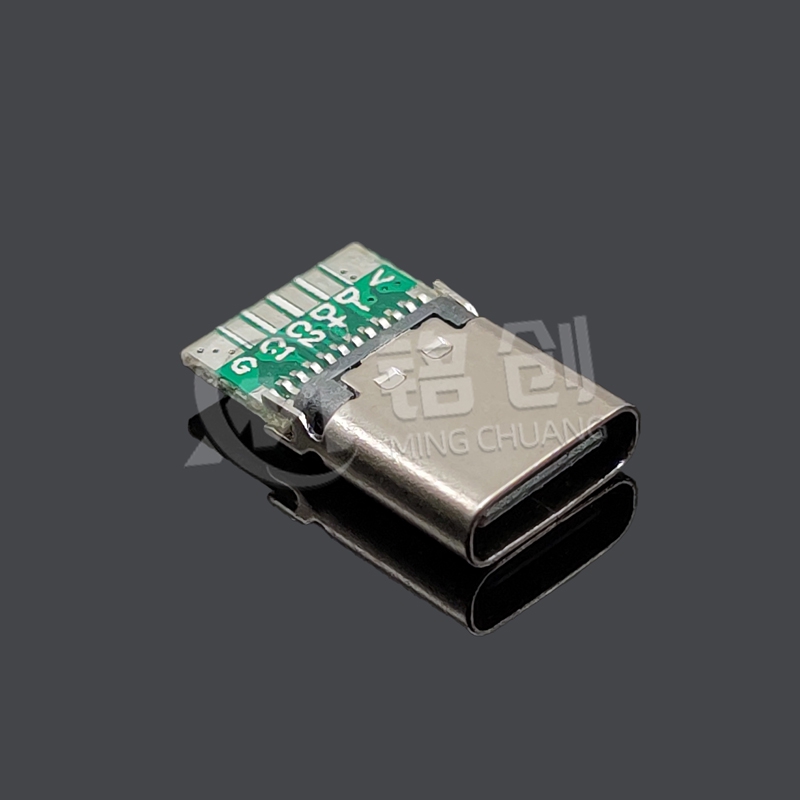
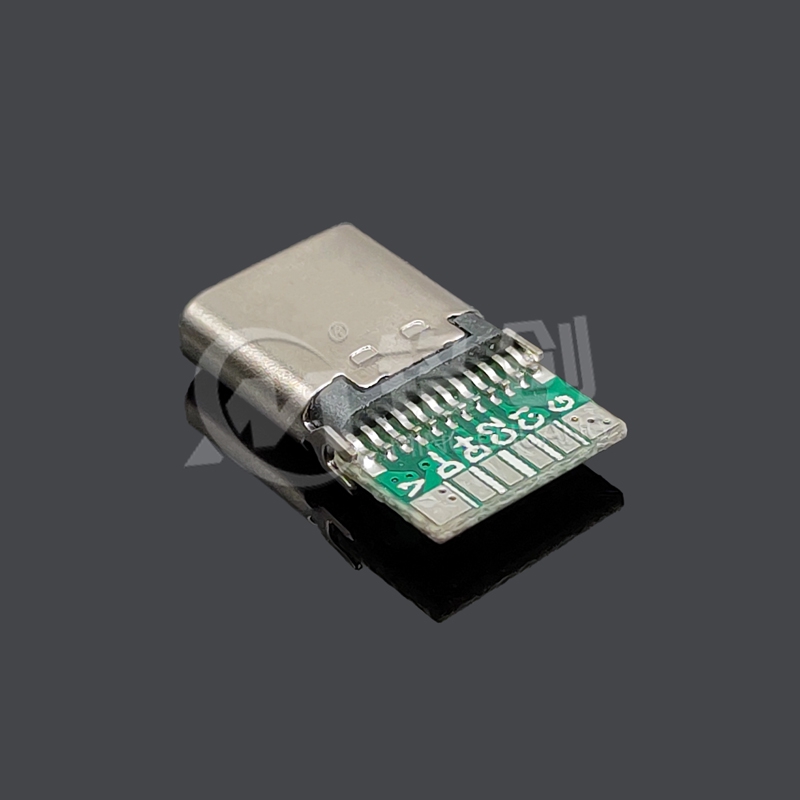


TYPE C female seat 24PIN clamp with six solder pads and a row of 201 brass LCP is a connector that balances structural stability and material durability. The design of the clamp and strip board enhances the fixing strength with the PCB board, and the six solder pads are arranged in parallel to simplify the soldering process; The material combination of 201 stainless steel shell, brass pins, and LCP base balances corrosion resistance, conductivity, and high temperature resistance; The 24PIN fully functional pin supports high-speed transmission and fast charging, and is widely used in scenarios such as smart homes, industrial control modules, and mid to high end digital accessories.
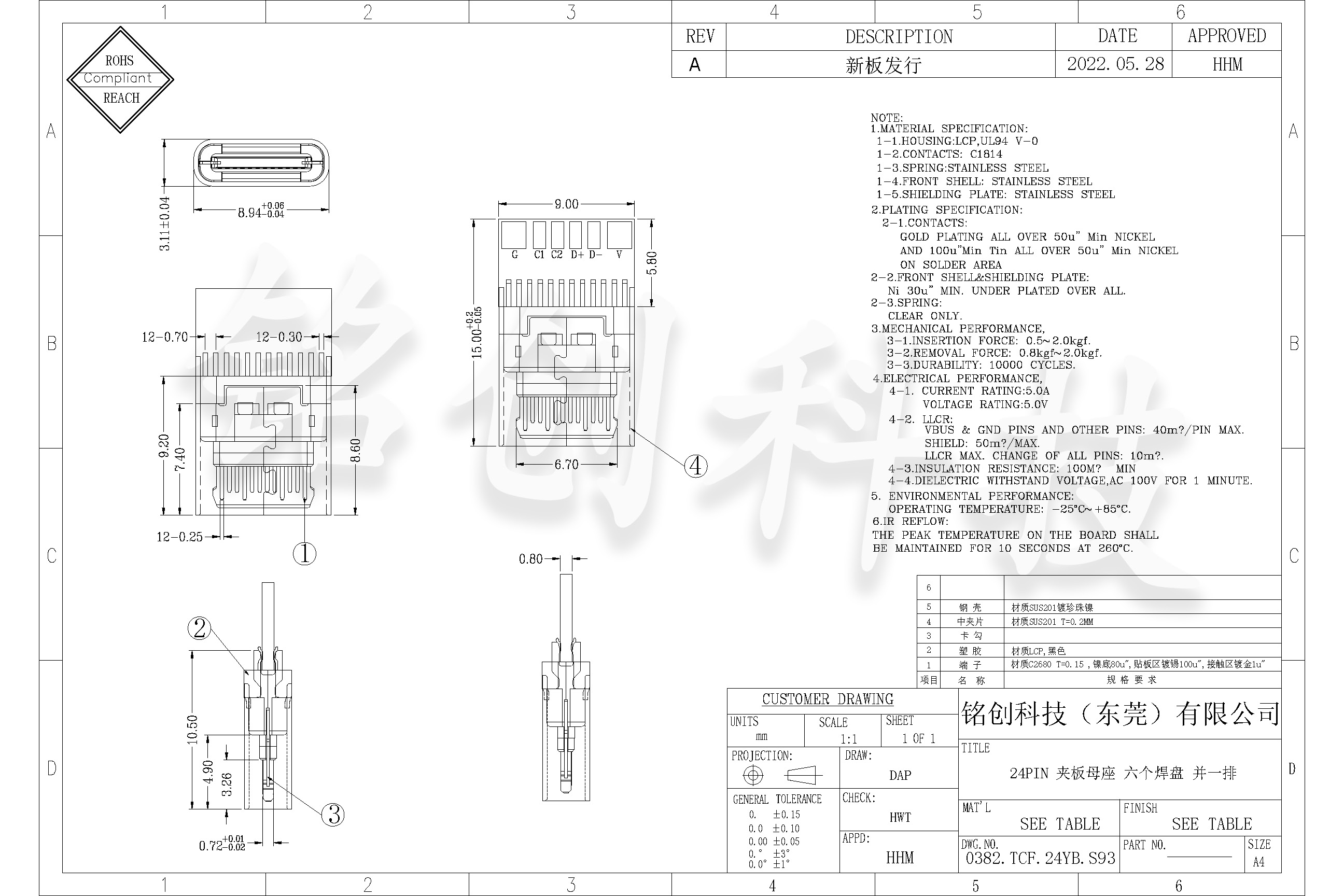
Interface and protocol compliance: Compliant with the USB Implementers Forum (USB-IF) USB3.2 Gen2 specification and PD 3.0 standard, passed compatibility testing to ensure compatibility with TYPE C male and fast charging devices, avoiding transmission interruptions and protocol incompatibility issues.
Environmental compliance: Fully compliant with EU RoHS 3.0 (2015/863/EU) and Chinese GB/T 26572-2011, strictly restricting 10 harmful substances such as lead, mercury, cadmium, etc. Raw materials such as 201 stainless steel, brass, LCP, etc. have passed SGS environmental testing and provided compliance reports.
Electrical safety compliance: comply with IEC 62368-1 safety standard, insulation resistance ≥ 1000M Ω (500V DC), withstand voltage ≥ 500V AC (no breakdown for 1 minute); Electromagnetic shielding effectiveness ≥ 45dB (1GHz frequency band), meets FCC Part 15 Class B EMC requirements, and avoids interference with surrounding electronic components.
Production quality compliance: Following the ISO 9001 system, the entire process is tested (including clamp elasticity, solder pad conductivity, and dimensional accuracy), with 800pcs sampled from each batch and a failure rate of ≤ 0.15%. Batch quality reports can be provided.
For more information, please contact us:
- Hotline: +86 13310802726
- Email: mc13310802726@163.com
Storage and transportation
Storage environment: Temperature -10 ℃~40 ℃, relative humidity 30%~60%, avoid high temperature and humidity, direct sunlight or contact with corrosive gases (such as hydrogen sulfide, solder smoke), prevent 201 stainless steel shell corrosion and brass pin oxidation.
Transportation requirements: Packaged in anti-static bags and hard paper pallets, with 1000pcs per pallet. Cushioned foam should be placed at the clip of the clamp plate, and the "Do not drop under light pressure" and "anti-static" signs should be affixed to avoid deformation of the clamp plate and damage to the solder pads caused by compression.
After opening: Unused products must be resealed within 48 hours and exposed to air for no more than 72 hours to prevent pad oxidation from affecting welding adhesion.
Installation operation
PCB design: The slot size corresponding to the clamp plate needs to be matched (width 6.2mm ± 0.05mm, depth 0.3mm), and the layout of six solder pads should be consistent with the mother seat (spacing 1.5mm ± 0.03mm); The high-speed differential line needs to control impedance of 90 Ω± 10% and avoid the metal part of the clamp plate (to prevent signal interference).
Reflow soldering parameters: preheating section 150-180 ℃ (60 seconds), peak section 250-260 ℃ (≤ 10 seconds), cooling rate ≤ 3 ℃/second, LCP strip board is resistant to high temperature but needs to avoid prolonged high temperature (to prevent deformation).
Post installation inspection: Use tweezers to gently pull the female seat and confirm that the clamp is firmly engaged (without looseness); By using AOI to inspect the welding quality of solder pads, ensure no virtual soldering or continuous soldering (all six solder pads need to be conductive).
Operation and Maintenance
Current limit: VBUS power supply should not exceed 3A (at 20V) to avoid long-term overload and overheating of brass power pins (brass has good conductivity, but heat dissipation needs to be coordinated with PCB copper foil).
Insertion and extraction specifications: Vertical insertion and extraction of male heads is prohibited, and tilting or pulling with force is prohibited. Although the clamp structure enhances fixation, excessive force may cause PCB board slotting deformation (it is recommended to control the insertion and extraction life within 8000 times).
Cleaning and maintenance: When there is dust on the interface, use a dry soft bristled brush to clean it. Do not touch the pins or clamps with metal tools to prevent scratching of the coating or failure of the shrapnel.
Taboos
It is prohibited to dismantle the clamp or trim the strip board without authorization, otherwise it will damage the structural strength and cause the mother seat to fall off or short circuit.
Prohibited for use in high humidity (>85% RH) or high salt spray environments (such as seaside equipment), 201 stainless steel has limited corrosion resistance, and 304 stainless steel should be used instead for such scenarios.
When the clamp plate is found to be loose, the solder pad is detached, or the contact is poor (such as frequent disconnection of the equipment), immediately replace it with a new female socket to avoid damaging the male head or equipment motherboard.
For more information, please contact us:
- Hotline: +86 13310802726
- Email: mc13310802726@163.com


|
Mob:13310802726 / Tel:0769-85605360 |

|
Email:mc13310802726@163.com |

|
Address: No. 1, Chengxin Road, Changan Town, Dongguan City, Guangdong Province, China |

Copyright © 2024-2026 Mingchuang Technology (Dongguan) Co., Ltd. All rights reserved Web Design—Quanfang Network